Showing posts with label Joseph L. Mankiewicz. Show all posts

Monday, February 10, 2014

Hume Cronyn One Life a Boatload of Characters

Hume Cronyn: A terrible liar but a great actor

Hume Cronyn was a talented actor born in 1911 in Ontario, Canada. His love
Hume Cronyn and Jessica Tandy
was performing on the on the stage, but he was also well known for his work on film and television. 


He was married for over 50 years to actress Jessica Tandy and the two of them worked together on several projects throughout their married life.

He was an amateur featherweight boxer and was nominated for Canada's 1932 Olympic Boxing team.

"As a child he was sent to private schools where he said he was miserable. 'I was the smallest boy and subject to chronic bullying,' he said. 'That's why I learned to box. It was not out of an aggressive nature but I had to defend myself.'" St. Petersburg Times - June 17, 2003  

Cronyn played some interesting characters, some odd characters and some downright nasty characters. In 1947's Brute Force he was a sadistic guard who beats a prisoner while the music of a Wagnerian opera plays. In Postman Always Rings Twice (1946) he is a conniving attorney. His range as an actor was well known. 


Cronyn was married to Jessica Tandy (1942–94; her death) and then Susan Cooper (1996–2003; his death). He was an Academy Award Nominee. I'm going to talk a bit about 6 of my favorite Hume Cronyn performances 1944-1985. I'll also mention a few other related things that were going on in the business.

A Terrible Liar: A Memoir is the name of Hume Cronyn's autobiography. It's a clever name for a book about an actor.

His first film was Alfred Hitchcock's Shadow of a Doubt in 1943. The character, Herbie Hawkins, a neighbor who is a crime fiction buff. He's not on screen that often but memorable as he discusses ideas for the perfect murder with Joseph Newton.

Cronyn appeared in a documentary Beyond Doubt, The Making of Hitchcock's Favorite Film in 2000. It was about the making of Shadow of a Doubt.

Cronyn's character in the film was described as "A milquetoast who is caught up in the search for the perfect way to commit a murder."  Michelangelo Red Antonioni Blue: Eight Reflections on Cinema by Murray Pomerance 

In 1964, Cronyn won a Tony Award for his Best Performance by a Featured Actor in a Play as Polonius opposite Richard Burton's Hamlet. Thoiugh Burton was nominated for Best Performance by a Leading Actor in a Play, Cronyn's was the only Tony the play would win that year. It was also the year that Barbra Streisand's play Funny Girl was up for Tony Awards. In 1994, Cronyn and Tandy received a special Tony Award for lifetime achievement.

I knew how to act with my back and my tail
With an hour of rehearsal, I never could fail
I'd a voice that would soften the hardest of hearts
Whether I took the lead, or in character parts
"Gus: The Theatre Cat"  (from Cats)
By T. S. Eliot, Andrew Lloyd Webber

In 1990 he won an Emmy award, Outstanding Lead Actor in a Miniseries or Special for his role in the HBO movie Age Old Friends as John Cooper. Vincent Gardenia as Michael  Aylott also won an Emmy Outstanding Supporting Actor for the same program.

That year The 62nd Annual Academy Awards and The 43rd Annual Tony Awards were nominated for Outstanding Variety, Music or Comedy Special Emmys but Sammy Davis, Jr. 60th Anniversary Celebration won that award.


1) Lifeboat, directed by Alfred Hitchcock, 1944. The film received 3 Academy Award nominations.

A handful of people are adrift on a lifeboat. They struggle for survival after having escaped ship following an attack on a ship by a German U-Boat in WWII. Lifeboat is a popular Hitchcock film to this day. 

Cronyn played Stanley "Sparks" Garrett. His costars are Tallulah Bankhead, William Bendix, Mary Anderson, John Hodiak, Henry Hull, Heather Angel, Canada Lee and and Walter Slezak.

Lifeboat is sometimes confused with the 1957 Tyrone Power film known by different titles Seven Waves Away, Abandon Ship! and Seven Days From Now. Starring with Power were Mai Zetterling, Lloyd Nolan and Finlay Currie. Director Richard Sale adapted the film from his 1938 short story.


Behind the scenes on Lifeboat had its share of sex and violence ..... well, in a manner of speaking.

Cronyn nearly drowned when a stunt went wrong. He was caught under a water-activator making waves for a storm scene and had to be rescued by a lifeguard. He suffered a number of broken ribs. Other actors on the set suffered various illnesses and injuries during the shoot.

Lifeboat Poster Print Hitchcock Classic Cast


Among the backstage stories is the famous nonwearing of knickers by star Tallulah Bankhead. Was this the original Underpants-Gate? From George Cukor:
 
"The dear girl never wore any panties. In fact she was way ahead of her time, ahead of Marilyn in not liking to wear any underwear. She was especially against panties. Well, she told me that she spent the entire film in the lifeboat. 

"Having the part involved a great deal of climbing in and out of the lifeboat. Every time she got into it, those already sitting there got a pretty good view of her at that rather unusual angle and it was quickly no secret that she didn't consider panties a part of her costume. 

"Someone complained but word got back to Hitch, who was told by the powers that be he was supposed to say something about it to her or delegate the  responsibility to someone. No one ever said a word to her and for the entire filming she never had to don panties."
-- It's Only a Movie: Alfred Hitchcock, A Personal Biography
by Charlotte Chandler 


"Leading lady Tallulah Bankhead created a stir in Hollywood by refusing to wear
Lifeboat Poster Insert
underwear, a fact that was readily apparent whenever she hiked her skirts to climb into the Lifeboat set. 


"When a female journalist visiting the set complained, Zanuck sent orders that somebody tell her to dress properly. The problem was, nobody wanted to tell the temperamental star to do so. When the unit manager asked Hitchcock for advice, he responded dryly.

"'I've always tried to be very careful of getting involved in departmental disputes. And in a case like this it's hard to decide where the responsibility lies. You might consider this a matter for the wardrobe department or perhaps for the makeup people or perhaps it's even for hairdressing!'"  In the end, Zanuck simply ordered the set closed.
-- Hitchcock, quoted in Hume Cronyn, A Terrible Liar: A Memoir, link above.

Cronyn was a personal friend of Hitchcock's. He would go on to become the only actor from Lifeboat to work on the series, The Alfred Hitchcock Hour. He and Jessica Tandy appeared in some terrific episodes of the director's television shows as did other actors from his films. 


Becoming Something: The Story of Canada Lee: "The first biography of the great black actor, activist, athlete--and tragic victim of the blacklist;" available now in digital format to download to your tablet or computer, for Ereaders such as the Kindle.

Personal favorites include Ms. Tandy in Toby and The Glass Eye on Alfred Hitchcock Presents. I've not seen all of the episodes yet. The Glass Eye also features William Shatner and Billy Barty. Toby also features Robert H. Harris George Mathews, Mary Wickes and Ellen Corby. Jessica Tandy is memorable for playing Lydia Brenner in The Birds 1963. One reason Hitchcock cast Tandy was her ability to play the full range that character needed.
Having lived around lakes, I couldn't help but include a raft. This one looks like a favorite. Reminds me of the raft from The Dick Van Dyke Show. As a prank Rob mails it to his wife (Mary Tyler Moore). Laura mistakenly opens it and it automatically blows up to full size in their living room.  Intex Challenger 2 Boat Set

It was also in 1944 that Hume Cronyn was nominated for an Academy Award for Best Supporting Actor for his performance in The Seventh Cross. Mr. Cronyn did not win nor did the film Lifeboat win any awards.

One of the most clever Hitchcock cameos can be found in this film. As the director himself could not suddenly pop up in the lifeboat, his image is seen in a newspaper advertisement. It's in before and after pictures in an ad for Reduco Obesity Slayer. Hitchcock said in an interview that he was proud since he'd recently lost weight at that time.

There's also supposed to be a life-sized model of Hitchcock floating in the water. One of the poor fellows who didn't make it. Can you spot it?


2) The Ziegfeld Follies (1946)

The film along is made up of unrelated sequences along the lines of the Ziegfeld Follies Broadway shows. There are lavish musical numbers and comedy sketches. The movie was filmed between 1944 and 1946 and was quite successful.

Ziegfeld Follies also features stars including Fred Astaire, Gene Kelly, Judy Garland, Esther Williams, Red Skelton. The DVD has special features. Hume Cronyn worked with stage and screen legend Fanny Brice.

"The film's best numbers (to our mind) are a couple of comedy skits, especially one done by Red Skelton as an announcer on a television show. .... Fanny Brice resurrects A Sweep-stake Ticket from the Follies of 1936 and plays a Bronx hausfrau quite as funnily with Hume Cronyn as she did with Bobby Clark."
-- New York Times, by Bosley Crowther  March 23, 1946


Hume Cronyn did a segment with Fanny Brice (the only member of the ensemble who was a star of the original Follies) and William Frawley. (Yes, before he would be Fred Mertz on I Love Lucy.) The scene centered around a winning lottery ticket.


1930: Fanny Brice with Robert Armstrong Cooking Breakfast For The One I Love.

On the Food Network chefs have to learn to cook and talk to the camera at the same time. Here's Fanny Brice, 'cooking' and singing in front of the camera in 1930.
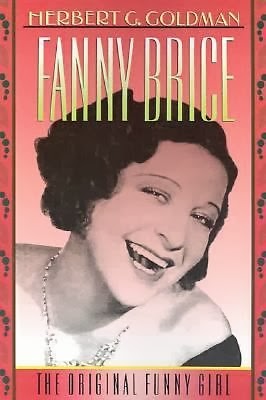

Fanny Brice: The Original Funny Girl 

This was one of six movies that Fannie Brice made, including Be Yourself, 1930; The Great Ziegfeld, 1936; Everybody Sing, 1938 and Ziegfeld Follies, 1946. Some blamed antisemitism and her accent for her lack of success on the big screen.

"She looked and sounded too ethnic and by conventional standards seemed a little goofy. 

"One can imagine a less sophisticated crowd accustomed to demure females such as Lillian Gish and Janet Gaynor being quite amazed by Brice. 

"Brice appeared in only a handful of feature films including one more starring musical Be Yourself! She admitted that she never did get used to movies. 

"'You have to be able to forget about the camera,' she said. 'In the theater I was always at ease, but in pictures there was that camera following me around like a cop.' How many other performers accustomed to the intimacy of the proscenium stage must have had the same complaint!"
-- The First Hollywood Musicals: A Critical Filmography of 171 Features, 1927 through 1932 by Edwin M. Bradley

This reminds me of how silent film star Clara Bow said she felt at the advent of talking pictures when the microphone first appeared on the sets.

 
The Great Ziegfeld boasts stars William Powell, Myrna Loy and Luise Rainer. It's the biopic winner of three Academy Awards including Best Picture. Fanny Brice also appeared in this film but Cronyn did not.

Barbra Streisand earned an Academy Award for playing Fanny Brice in Funny Girl. You can get a Funny Girl and Funny Lady set with Barbra Streisand stream the films. They're also on television with some regularity. Omar Sharif, James Caan, Walter Pidgeon.


Appx 1947, Alfred Hitchcock and Rope:

There was some discussion about all the writers and screenwriters involved with Rope in particular. There are also theories about how much is drawn from the  real-life case Leopold-Loeb kidnapping and thrill killing case of 14-year-old Bobby Franks in 1924. Once apprehended, Nathan Leopold, Jr. and Richard Loeb retained Clarence Darrow as counsel for their defense. 

The play had been retitled Rope's End on Broadway.

"Cronyn told me 'When Hitch asked me if I would like to work on Paul Hamilton's play Rope for the screen well I was very complimented, to say the least. But why would he choose a relatively inexperienced writer like me when he could get anyone he wanted? He had two reasons. 

"'First of all we got along smashingly. He may have felt more at ease with Canadians than with Americans. I think Hitch liked people intuitively the way a child does. When he liked you he really liked you. 

"'Second since he planned to do Rope exactly as it appeared on the stage with no editing in reel-long takes, he wanted someone who had a lot of stage experience as well as film knowledge. Then he brought in Aruthur Laurents, but Hitch and I got along well enough for him to ask me to do the same for his next film, Under Capricorn.'"
-- It's Only a Movie: Alfred Hitchcock A Personal Biography by Charlotte Chandler

"After commissioning his actor friend Hume Cronyn to write a motion picture treatment (transplanting the action from a London house to a Manhattan apartment) and hiring a young playwright Aruthur Laurents to compose the screenplay."

-- Hitchcock at the Source: The Auteur as Adapter edited by R. Barton Palmer

 
3) People Will Talk (1951)

Another nasty character was his anatomy professor,
Dr.. Rodney Elwell, Cary Grant's adversarial colleague in Joseph Mankiewicz's People Will Talk. Director Joseph Mankiewicz was a friend of Cronyn's.

In 1987, Cronyn told the New York Post, "I don't mind playing absolute bastards -- some of the best parts I've had have been heavies. I just don't want to play the grouch."
People Will Talk French Poster 
Cary Grant Jeanne Crain Finlay Currie
Some in the medical community do point out that Cary Grant's doctor doesn't show the height of overall ethical behavior in the film as he marries one of his patients who is at the same time one of his students.


People Will Talk was a personal film for the director. 

Professor Rodney Elwell, played by Hume Cronyn plays the main opponent of Dr. Praetorius (Cary Grant). 

It's nice to see an actor playing a mean character when you see that the actor understands why the character is that way. 

Helpful is when the reason for the behavior isn't something sadly stereotypical and unrealistic such as a character who suddenly turns evil upon a disfiguring disease or accident. 

If there is humanity in the evil, it makes the character and the circumstance all the more frightening, all the more memorable than a random monster with a chainsaw for instance. Someone where the audience hesitates to say, "That could never happen to me." Also a situation where "that could happen to anyone; that could happen today." At least the discussions can be more lively.

"Elwell isn't really an evil man. Rather, he's just one of those dreary people possessing an underfed and insignificant soul who manage to rise to positions of authority and who devote themselves to belittling others.  

"In his world view there is no place for people such as Praetorius, and the bulk of the film finds him diligently working to discredit our hero.

"Usually remembered as more charming characters, Cronyn does a wonderful job with this role. If there had been a scene showing him coiled and sunning himself on a rock I, for one, would not have been surprised."
-- Charleston Movie Examiner, Michael Wolff


Read some more about Cary Grant, director Joseph Mankiewicz and People Will Talk

The film was based on a 1934 play by Curt Goetz. While the plot and characters are similar, Mankiewicz worked on them to fit the times and his version of the story.

More difficult to find in the US is a 1950 German film made from the original play and The film is called Frauenarzt Dr. Prätorius and it features the playwright, Curt Goetz. The play is also available in paper form. Again, you have to search for an English translation.
Part of the
31 Days Of Oscar Blogathon 2014

Dr. med. Hiob Pratorius: Facharzt fur Chirurgie und Frauenleiden: eine Geschichte ohne Politik, nach alten, aber guten Motiven neuerzahlt (Universal-Bibliothek)
translates into English, according to Google as:

Dr. Job Pratorius: specialist for surgery and gynecological disorders: a story without politics, according to the old, but good motives of new pay (Universal Library).
 

This is available as an 1986 German publication.

It may be interesting to compare and contrast the stories and see the differences in the play and the film.


4) Sunrise at Campobello (1960).  
This film received 4 Oscar nominations. 

Hume Cronyn as
Louis McHenry Howe
Photograph Master Print
His costars include Ralph Bellamy, Greer Garson and Jean Hagen. He played Louis Howe.

"The story of Franklin D Roosevelt before he was known as FDR it is not a political story but a human story of family life and family love of courage and triumph over disaster and best of all it is a true story that the whole family will enjoy."
-- St. Petersburg Times
- Nov 24, 1960


It's from a play for which Bellamy had won a Best Actor Tony. The characters are playing real people. They had the opportunity to meet with Eleanor Roosevelt.

When possible, the actors met with the characters they were to play. They studied video and audio recordings to get their voices and movements right. They talked to family members and coworkers. 

Ralph Bellamy, who played Roosevelt, worked with physical therapists. Books like American Politics in Hollywood Film examine a range of movies about politics and celebrities who've gone from Hollywood into politics.  


Only Ralph Bellamy and Ann Shoemaker who played FDR's mother were in the original Broadway stage production.

"I'll tell you one thing acting has given me and that's a passion for living. I sometimes tell students at the Academy of Dramatic Arts that an actor at work is a person the audience can identify wiht and believe in. An actor isn't just wearing the clothes and habits or a person- that's just razzle dazzle  he is the person."
-- The News and Courier - May 25, 1960, Hume Cronyn giving interviews promoting Sunrise at Campobello
 

He was Class of 1934 at The American Academy of Dramatic Arts. There is a Hume Cronyn Scholarship in his honor. Other alumni include such notable actors and directors as Cecil B. De Mille, Spencer Tracy, Rosalind Russell and Garson Kanin.

Read more about Ralph Bellamy and his work on Sunrise at Campobello

 
Sometimes his real life read like a movie script. In 1969, although Cronyn was diagnosed with optic cancer and had his left eye removed, he insisted on completing his contract with Mankiewicz on There Was a Crooked Man. Later that year, he accepted two more films, The Arrangement and Gaily Gaily. 

In 1978 Cronyn, his secretary and a real estate agent were held at gunpoint and locked in the basement of his Pound Creek NY suburban home by a woman and man who ransacked the house. Police said the woman had cased the property by visiting earlier and posing as a prospective buyer. 

The men were handcuffed and the woman tied and locked in the basement. They managed to escape and call the police. The robbers who'd been gathering art and valuables abandoned the loot and escaped before the cops arrived. Jessica Tandy was in New York City appearing in The Gin Game a play from which Cronyn had recently withdrawn.
-- Ocala Star-Banner - Jul 14, 1978


5) The World According to Garp (1982)  
The film received 2 Academy Award nominations. 

His costars include Robin Williams, Mary Beth Hurt, Glenn Close, John Lithgow, Swoosie Kurtz and his wife Jessica Tandy. He and Tandy play the parents of Glenn Close's character, Jennie Fields. This was the first feature film for both Robin Williams and Glenn Close.


Overall the film and performances got positive reviews. While he and Jessica Tandy have relatively small parts they are well cast in this fun and touching dramatic comedy. What a great cast.

Jessica Tandy won an Oscar for her work in Driving Miss Daisy
Hume Cronyn and costar Morgan Freeman 1990
Original WIRE PHOTO

The film received 9 Academy Award nominations and won 4 Oscars


6) Cocoon 1985

Director Ron Howard. An early film to deal with a person battling Alzheimers Disease with the character Rose Lefkowitz played by Herta Ware.

Cocoon is a 1985 science fiction film directed by Ron Howard about a group of elderly people who become rejuvenated by the pods that aliens have left in the water.

Cocoon was a major coup for older actors, particularly for older actresses. There was a sequel in 1988, The Return. While the performances, including those of Cronyn and Tandy,
Joe and Alma Finley in both films, got good reviews the story did not.


A letter Hume Cronyn wrote to his youngest daughter, Tandy is featured in the book, Posterity: Letters of Great Americans to Their Children.  The letter is, as they say "straightforward, challenging, respectful and affectionate. With clarity and humanity," he speaks to his adolescent daughter, who is studying in Germany, about the Nazi atrocities and Germany in general. 

Letters in the book are from parents in all fields and many time periods, covering variety of subjects such as love, loss, aging, work and Rules to Live by.

Cocoon Jessica Tandy Hume Cronyn
On June 22, 2012, they announced that Ron Howard, who directed the original Cocoon in 1985, is scheduled to receive his second star on the Hollywood Walk of Fame 2013. 

This time it will be for film, particularly for directing. Mr. Howard has a star at 6838 Hollywood Blvd. for his work in television. At the time of this posting I don't know when his star ceremony will be. Recipients have 5 years to book ceremony.


Previous Entries in the 31 Days of Oscar Blogathon


Great Early Best Original Song Oscar Winners Pre-1960, 2014 news, too

Bringing Up Cary Grant and the Oscars : Why didn't he ever win an Academy Award?


Fanny in a Feather Boa Bags
Fanny Brice in a Feather Boa Bags by hermoines
Browse Fanny Brice Bags online at Zazzle.com


*About links: Please note that links will open in separate windows for your convenience. You can close them and go back to this blog article in its original window.  
* If you hold copyright to any photos and would like them removed, please contact me and I'd be happy to remove them.

Friday, January 31, 2014

Bringing up Cary Grant and the Oscars

None But Lonely Heart Cary Grant
1944 Studio Still
Archie and Old Oscar : Four Decades at The Movies

Cary Grant made 72 films from 1932 to 1966. In his career he was nominated for two competitive Academy Awards, both Best Actor.

First for Penny Serenade and then None But the Lonely Heart 1941 and 1944 respectively. He didn't win either. 

The reasons why he never won and wasn't nominated more often are debatable.

In 1970, he received an honorary lifetime achievement Oscar "for his unique mastery of the art of screen acting." This was a quarter century after his last nomination and it was after he'd retired from the business.

His specialties, probably the films for which we best remember him, were forms of romantic comedy (screwball comedies and other types of comedy) and Hitchcock-type thrillers.  

Holiday, 1938 doesn't get the attention that it deserves. Directors hired him because he could bring certain qualities to any role.

All of the nominated performances and films are very good and recommended. To say someone should have been nominated has nothing to do with the talented people who actually were nominated. Nowhere is it suggested that he deserved an award more than anyone else.

I think he had some great performances that should have been recognized, nominated at least. Maybe there was some snubbing going on. I looked back at the history to see how it went. All the movies that were nominated and the movies that won are terrific.

Should he have been nominated more often? Should he have received an Oscar? If he was snubbed why might that be? Instead of saying yes or no, saying the obvious that I'm a fan and like his films, I looked at some history to find out. This turned me onto more films across the board and introduced me to more info about the film world. All good.

Types of Films. Some say it's because of the types of films he made. Much of
Mae West Cary Grant
Magazine Photo clipping
8x10 1page
his career Cary Grant made films that were hits with not the type that the Academy is apt to award. They weren't necessarily favored by critics. 

He focused on the fans, the box office. He never made movies that were, as some say, Oscar bait.

To this day, comedies, though arguably more difficult than drama, are rarely honored with Academy Awards. 

When the first Academy Awards were handed out in 1929, Charlie Chaplin received a special award "for versatility and genius in acting, writing, directing and producing." This was for his 1928 film The Circus. At that time the first president of the Academy was friend Douglas Fairbanks. **

While popular and admired, Alfred Hitchcock's films were rarely recognized by the Academy. 

When Mae West said her famous line, "Why don't you come up and see me?" It was said to a young Cary Grant in She Done Him Wrong, 1932.

When his films were being made. The period during which he was making movies probably played a part. During World War Two were they more likely to award an uplifting, patriotic movie and performance? In the 1940s, particularly during the Second World War, films with patriotic and/or homespun values  were popular.
Cary Grant glossy photo

He was politically incorrect. He certainly never seemed to campaign for an Oscar. In 1951, he starred in a film, People Will Talk, that appeared to deal with McCarthy-style hearings at the same time that they were actually going on. 

When people scorned Ingrid Bergman for having an affair and having children with another man, he stood by her. 

She left the country and lived in Italy for almost a decade thanks to the scandal. When she won Best Actress for Anastasia, Cary Grant accepted the Oscar for her in 1957.

Don't hate me because I'm beautiful. I have a friend who's a Tom Cruise fan. She insists that Cary Grant, 'like Cruise,' is not taken seriously by the Academy because of his appearance. Tall, dark and handsome vs short, gold and shiny? 

A high percentage of Hollywood stars appear to be more attractive than not, particularly with the help of make up, hair, lighting and costume professionals, etc. I'm not altogether sure about this one. 

"Actors as a group are the world's biggest worriers. A lot of them worry about Cary Grant. One star about the same age as Cary recently complained: 'How does he do it? He's handsomer than when he was Mae West's leading man. I can't make an appearance without my make-up man along -- and this guy doesn't even use makeup on camera.' .... 

"Someone called Rock Hudson a young Cary Grant. Commented Rock, 'How can there be a young Cary Grant? The real one is ageless.'" 
-- Daytona Beach Morning Journal, Jun 28, 1964

He always played himself, He made it look too easy, He always played the same character. Some people say he never won because he was always playing himself in movies. I guess those people knew him personally.


"Grant’s attention to detail became legendary. He practiced hours to discover the funniest, most effective way to light a cigarette, fasten a cuff link, straighten his tie. No motion was too insignificant. 'I used to stand in the back of movie houses and listen to the audience. If they laughed at a certain piece of business I never forgot it.'"
-- The Saturday Evening Post - March 1978


"I wonder if audiences realize what is the hardest thing in the world. It is for every actor to be what you call natural. Whenever I hear people say that Crosby or Gary Cooper just play themselves in pictures, I have to laugh. There is no such thing. Remember how self-conscious most people become when they have their picture taken or someone breaks out an amateur movie camera."
-- Films and Filming - July 1961 What it Means to be a Star by Cary Grant.

This quote makes me think of our present-day Reality Shows and all the craft-work that goes into making people come off as so-called realistic.

The Academy of Motion Pictures Arts and Sciences (AMPAS) was still pretty new in 1932 when Grant made his first film. The first awards were given out in May of 1929. They honored movies released August 1, 1927 – August 1, 1928.

The idea for the Academy began with the heads of the major film studios discussing the creation of an organized group for the film industry and a banquet. It was established that membership be invitation only and open to those in the business in certain branches of the industry as it is today. Categories and processes have morphed over the years but it's similar.  This is a very rough explanation of course.

Some say he didn't receive more nominations because of his way of doing business. He was a businessman as well as being an actor. Some of his tactics, methods to get himself and his films a good deal, rubbed people the wrong way. He was very specific in his contracts. But this suggestion doesn't seem realistic. He wasn't that unique. Then and now, ego, salary requests are all part of the game. Is the performer worth it? Just like any other business.


"Ain’t nobody got so much money that they don’t want all the money that’s coming to them."
-- Dolly Parton in The New York Times, John Bowe, speaking about music royalties. She's also said this in television interviews.


Going independent. Some say Grant was snubbed because he was the first major Hollywood star to go independent. By not renewing his studio contract, he left the studio system, which almost completely controlled what an actor could or could not do. [I sometimes saw it said that he was the first major Hollywood talking pictures star to leave the studio system.]

In this way, Grant was able to control every aspect of his career. This was dangerous because he ran the risk of not working since no particular studio had an interest in his career long term.

He's a rebel and he'll never ever be any good...
He's a rebel 'cause he never ever does what he should
But just because he doesn't do what everybody else does..... (Was he one of the original industry rebels? For some reason The Crystals' song came to mind. :) 


He also resigned from the Academy apparently garnering long-term ire of a lot of people in the industry. Rightly or wrongly, they took that personally and didn't forget it. So he was an outsider. But he still knew the value that an Oscar would bring to both his own career and to the overall takings any film that won.


"Please accept my resignation. I don't want to belong to any club that will accept people like me as a member." Groucho Marx sent this in a telegram to the Friar's Club of Beverly Hills to which he belonged; Groucho and Me (1959)

I can see why he was a hero for present-day nonconformists such as Bill Murray and John Cleese who'd go on to shake things up in the industry years later. Cleese even named his character in A Fish Called Wanda, Archie Leach after Cary Grant's birth name.
 
I have favorite Cary Grant films. I love the comedies and the Hitchcock movies. There are still some of his films that I haven't seen so it's fun to see those. I get a kick out of seeing his early films.

Grant appeared as a leading man opposite Marlene Dietrich in Blonde Venus (1932). It's a good very early Grant film. If you want to see how far the actor evolved watch that movie and others from this era.
Dietrich is wonderful in it and how often do you get to see a voodoo gorilla striptease?

You'll get to see the raw talent (and the youthful good looks). You can see why he feared becoming just an arm ornament for top female stars.


Philadelphia Story Photograph Master Print High Quality
The Philadelphia Story was a big hit in 1940. It got six Oscar nominations including Outstanding Production aka Best Picture. 

Three performances were called out for acting nominations: Best Actor: James Stewart; Best Actress: Katharine Hepburn and Best Supporting Actress: Ruth Hussey. 

James Stewart won for Best Actor.

Stewart said very complementary things about working with Grant and about his performance in the film. Joseph L. Mankiewicz the movie's producer, wrote Cary Grant a letter to thank him. 

"Whatever success this picture is having ... is due in my opinion to you in far greater proportions than anyone has seen fit to shout about. .... Your presence as Dexter and particularly your sensitive and brilliant playing of the role, contribute what I consider to the backbone and basis of practically ever emotional value in the piece. I can think of no one who could have done as well or given as much."
Cary Grant
: A Class Apart by Graham McCann 


Richard Corliss, Time Magazine's film editor, suggested that Cary Grant was snubbed for an Oscar nomination in 1941. In a 2010 article Corliss wrote that Grant should've been nominated for a Best Actor Oscar for his work in the classic film, His Girl Friday. 


Penny Serenade Cary Grant Original studio Still

In 1941 two more of my personal favorites were released, very different roles for him: Penny Serenade, costarring with Irene Dunne and Suspicion with Joan Fontaine. 

He played a newspaperman, the father of an adopted daughter. The film, something of a tear-jerker, which could have been maudlin, is saved by the performances of Grant and Dunne. It was chosen by Cher as one of her favorites when she was a guest programmer on Turner Classic Movies (TCM) in 2013.The film also featured Beulah Bondi and Edgar Buchanan. 

Cary Grant's first Oscar nomination was for Penny Serenade. The big night was February 26, 1942, The 14th Academy Awards.


"I went to a sneak preview and got into the theater after dark and heard a couple behind me say, 'Oh, another Cary Grant, Irene Dunne comedy.' Little did they know. By the half way point both were blubbering. Oh, it was a four hankie affair. I have a miscarriage in Japan, Cary has to cry when the judge tries to take away our adopted girl, then she dies.

"His crying scene was so magnificent I said, 'Oh, he's going to win the Oscar.' And he nearly did. He was also great that year in Suspicion. But I told him he'd never win. He made everything seem spontaneous, so easy. But that is fine acting when people think you are playing yourself. I found comedy hardest, drama less so but what did I know? I never even got a nomination that year."
Irene Dunne; The Toronto Star interview with Jim Bawden

Other Best Actor nominees that year were Gary Cooper: Sergeant York, Orson Welles: Citizen Kane, Walter Huston: All That Money Can Buy and Robert Montgomery: Here Comes Mr. Jordan. Gary Cooper was not nominated for his role in the comedy, Ball of Fire but for the role as the World War I hero Sergeant York. Cooper won the Best Actor award that year.

Newspaper mogul William Randolph Hearst and his defenders had been working to intimidate anyone connected with the film Citizen Kane and Orson Welles in particular. His papers had set out a smear campaign against him.

Welles was another Hollywood outsider. His negative comments about the industry served only to fuel the fire that Hearst was setting against him. The film received nine Academy Award nominations but it only won the Best Writing (Original Screenplay) Oscar. Welles shared the award for best screenplay with Herman Mankiewicz. I have a post about Welles' Oscar nomination and his Screenplay Oscar.


 A short film of the awards banquet, no sound. Supporting actor winners were still receiving plaques.

The nominees for Best Actress included sisters, Cary Grant's costar, Joan Fontaine in Suspicion and Olivia de Havilland: Hold Back the Dawn. Other nominees in this category were Bette Davis: The Little Foxes, Greer Garson: Blossoms in the Dust and  Barbara Stanwyck: Ball of Fire (with Gary Cooper).  Joan Fontaine won the award. It would be the only acting award ever received for any Alfred Hitchcock film.

Quite a bit has been written about a rivalry between Cary Grant and Gary Cooper. The two men were in the studio system in the thirties competing for roles which meant exposure, more and better parts in film. They were also competing for women. Beauties such as the actress/model Phyllis Brooks were linked to both of them. Competition at work, for money and ladies? Was it just a case of men playing Quien es mas macho?

Any information I found in a brief search was second or third hand or fragments of quotes out of context. Much of it could be apocryphal. Good news isn't interesting, and no news isn't news at all. An assumption is that there was and is competition in the industry between all the participants. Often when we see a film run on television a commentator will tell us the other actors who were also considered for the part, who turned down the role. It's interesting.

I liked his 1942 movie, Talk of the Town, which costarred Jean Arthur and Ronald Colman. It had seven Academy Award nominations including one for Outstanding Motion Picture. Unfortunately it didn't win any Oscars. All three stars turn in very good performances.


Cary Grant None but the Lonely Heart Movie ad Magazine Photo clipping

Grant's second and only other nomination was for his role in the 1944 film, None but the Lonely Heart. Both Charles Boyer, in Gaslight and Cary Grant were nominated for films where they were cast against type.

Grant plays a rougher character in this film, more serious than fans were used to seeing. He speaks with a Cockney accent which he rarely did in films. I think we see that (hear it) in Sylvia Scarlett and a little in Mr. Lucky where there's a fun bit about rhyming slang.

The film had three nominations total. Ethel Barrymore, who played his mother, won the Actress in a Supporting Role Academy Award.

It was more a critical success if not such a big box office hit. Reviewers for Time and Variety praised the film and his acting. The Hollywood Reporter called it "simply the finest thing he has ever done."


None But the Lonely Heart
costars  Ethel Barrymore, Barry Fitzgerald, June Duprez, Jane Wyatt, George Coulouris and Dan Duryea.


Bosley Crowther in a 1944 New York Times review: "Such a sensitive and warmly revealing and poetically lovely film it is that one may feel wonder and amazement at seeing it on the screen.  

"Especially may one marvel at Cary Grant in the leading role and be entranced by the thoughtfulness of casting Ethel Barrymore as his excellent support." ..."Mr. Grant's performance as Ernie Mott, the 'tramp of the Universe'—the 'citizen of the Great Smoke' who was 'barmy as the muffin man'—is an exceptional characterization of bewilderment and arrogance ..."

Crowther's review ends with the comment, "It may possibly be that this picture will not be widely accepted just now, but we are sure that it will be remembered—and revived—long after many current favorites are forgotten."

Ingrid Bergman won her first Best Actress Oscar for her role opposite Boyer in Gaslight.  Bing Crosby won the Best Actor award for Going My Way. The film also won Best Picture that year.
 
"'One of the films that I think shows a successful bit of acting is None But the Lonely Heart,' he said. 'That's where I found a form that fitted me. I played a well-dressed, fairly sophisticated chap who is put into intolerable situations. It's a formula, and I used it often.'

"Other films he especially liked included North by Northwest, Charade, Bringing Up Baby and The Philadelphia Story.

"'I think Indiscreet and Notorious, both with Ingrid Bergman, are good. They hold up.'"
Redbook March 1987; This was one of Cary Grant's last interviews

In 1948 at the 20th Academy Awards, Sidney Sheldon won an Oscar for Best Original Screenplay of 1947 for The Bachelor and the Bobbysoxer. Sheldon went on to have more success writing books and television. The Bishop's Wife had been nominated for awards, including Best Picture, but hadn't won.


Indiscreet Cary Grant Ingrid Bergman
16X20 B&W
In 1946, Grant made the Alfred Hitchcock film Notorious with Ingrid Bergman and Claude Rains. It's one of my all time favorites. The film has one of the most erotic and memorable kissing scenes ever.

In a 2012 Vanity Fair interview, Sophia Loren talks about Cary Grant. He's in her book, Sophia: Living and Loving: Her Own Story. Grant proposed to her repeatedly when they were filming Houseboat. 

"When asked for one piece of advice Sophia would like to give to young actresses everywhere it's...

"'Learn how to kiss. Now they kiss in another way,' she said, 'like they are devouring each other.' She demonstrated. 'They should see how people like Ingrid Bergman and Cary Grant kiss in Notorious. Do they eat each other's faces? No!'"

Another one of my favorites was People Will Talk, a Joseph L  Mankiewicz film from 1951. It is a love story but also a very political and ideological story.

Joseph L. Mankiewicz had won both Best Director and Best Screenplay Academy Awards in the 22nd and 23rd Academy Awards consecutively. His film A Letter to Three Wives  came out in 1949, All About Eve was a hit in 1950.

Mr. Mankiewicz became the target of a McCarthy-style attack because he refused to sign a Loyalty Oath, an affidavit stating that members of the Screen Directors Guild were not members of the Communist Party. The Hollywood Blacklist is something that should be talked about and not forgotten so this kind of thing won't happen again.


His next film, People Will Talk, would star Cary Grant. As he wrote the screenplay and filming began, the events and fallout of the situation in his professional life played out behind the scenes. At the same time the witch hunts went on in the entire Hollywood community.

Reviewers and film historians say Grant is a stand-in for the director's taking a stand against McCarthyism in the guise of a doctor up on ethics charges. Grant  was the perfect choice all around for this role.

Mankiewicz has called the situation "a bewildering fascinating battle with Cecil DeMille about a compulsory loyalty oath for directors. ... Which meant that in order to direct a film in the United States of America you have to state that you were not, and had never been a member of the Communist party."
Joseph L. Mankiewicz: Interviews

People Will Talk was one of the first, if not the first film that not only deals with (if candy coated) the House Un-American Activities Committee hearings but is partly an anti-McCarthy story.

Grant's costar is Jeanne Crain. Supporting performers are Hume Cronyn, Finlay Currie, Walter Slezak,Sidney Blackmer and Margaret Hamilton.

This was just one of the topics that the director/screenwriter successfully incorporated into the film and got past the censors. It was a time when they say Katharine Hepburn was instructed to keep her eyes open when Cary Grant kissed her at the end of The Philadelphia Story, even though the two were supposed to be remarried at that point. Maybe they worried that if she closed her eyes she might be transported and go into some kind of romantic fit?

It's helpful to watch the movie keeping in mind a sense of what was going on at the time with the McCarthy hearings,
People Will Talk Cary Grant Studio Still
what was happening with women's rights and censorship. I've heard praise by disability advocates for Finlay Currie's portrayal of the character Shunderson, the doctor's right-hand man.

Joseph L  Mankiewicz's choice of Grant for the lead role was called inspired, he'd publicly condemned McCarthy-style blacklists. In hindsight, it has been called one of his best performances and the film is said to be one of the director's personal favorites.

"Grant as Dr. Noah Praetorius would traverse the emotional spectrum from being charming and  compassionate to being philosophical and intensely serious. ... For the good of the film and the message that Mankiewicz wanted to convey Grant succeeded in delivering one of his best performances."
Joseph L. Mankiewicz: Critical Essays With an Annotated Bibliography and a Filmography
By Cheryl Bray Lower, R. Barton Palmer

Ingrid Bergman had spent the better part of the 1950s out of the country thanks to a scandal brought on by her relationship with Roberto Rossellini. It was an affair which produced three children. Bergman's actions were denounced on the floor of the Senate.

You may remember how over 40 years later, in May of 1992, Vice President Dan Quayle condemned the fictional TV character Murphy Brown (Candice Bergen) and her "poverty of values," saying that by having a child without being married, she was mocking the importance of fathers.


Cary Grant was something of an outsider and he stood by friends when they were pushed outside. He supported Bergman throughout this period.

In 1957 she was nominated for the Best Actress Oscar for her work in Anastasia. She asked Grant to accept the Oscar if she should win and she did just that. In 1958 he returned to be a presenter. This was the year he made The Pride and the Passion with Sophia Loren and Frank Sinatra.

It was rehearsing for the 1958 Oscar ceremony that this famous photo was taken
Clark Gable, Cary Grant, Bob Hope and David Niven
from Life Magazine

Grant would have been suspect to some people because of his personal and professional friendships with people in all different realms. He had friends who were conservative and liberal politically, people who were of different generations and personalities. Like anyone it's impossible to characterize a person's life by a quote here or there.


Father Goose Cary Grant Leslie Caron British Lobby Card


He along with friends such as Hitchcock were some of the first to hire and work with blacklisted artists. After a dozen years undercover, Frank Tarloff decided to risk using his real name in the credits of Father Goose, Cary Grant's 1964 film.

Tarloff would co-write it with SH Barnett and Peter Stone. They won the Oscar for Best Writing, Story and Screenplay written directly for the screen. With the Oscar win, Tarloff was able to end his exile, return to Hollywood and return to work.

"By 1965 Grant had never won an Academy Award. That year, accepting the Oscar for co-writing a Grant vehicle called Father Goose, Peter Stone was perfectly succinct:
'My thanks to Cary Grant,' he said, ‘who keeps winning these things for other people.'"

Peter Bogdonavich, The Saturday Evening Post
- March 1978


Cary Grant retired from film making in 1966. His last movie was Walk, Don't Run with Samantha Eggar and Jim Hutton.


Grant repeated an analogy often in discussions, speeches and interviews. I remember Joan Crawford (who did win one) on a talk show, Mike Douglas?, saying how very important the Oscar is to actors. Here's Cary Grant's analogy from an interview with Gene Siskel in early 1976.

"'Chaplin is waiting a long time at a trolley car stop. He`s the first in line of what turns out to be a huge crowd. The trolley finally arrives, he`s the first one on, but then the crowd behind him surges through the door and pushes him right through the door on the other side.

"'And that's a lot like what Hollywood is like,' Grant said. 'When you're a young man, Douglas Fairbanks Sr. is driving. Wally Berry is the conductor, and Chaplin's got a front row seat. You take your seat, and back behind you is Gary Cooper. He has got his long feet stuck out in front of one of the exit doors, and people keep tripping over him and onto the street.

"'Suddenly a young man named Ty Power gets on. He asks you to move over. You make a picture with Joan Fontaine. You think you do a good job, but she wins the Oscar, and you get nothing.

"'And pretty soon more and more people get on, it's getting very crowded, and then you decide to get off.'
"Told that there would always be a place for Cary Grant on the trolley car, he gave an instantaneous response:

"'I forgot to tell you. When you get off the trolley, you notice that it's been doing nothing but going around in circles. It doesn't go anywhere. You see the same things over and over. So you might as well get off.'"
-- The Real Cary Grant A Revealing Weekend With Archibald Leach Chicago Tribune
By Gene Siskel, January 1976 and reprinted early December 1986

The 42nd Academy Awards would be presented April 7, 1970. It was announced that he was to be honored with a lifetime achievement honorary Oscar. Still some members were against this decision and his rejoining the Academy helped to smooth some ruffled feathers. The award meant a lot to Mr. Grant. He was happy to get it and thrilled that he received standing ovations.

The timing was difficult as that spring found him dealing with a much publicized paternity suit. The young lady, who had and would give many interviews about the situation, had threatened to hold a press conference outside the Dorothy Chandler Pavilion on the night of the Oscars. Grace Kelly was supposed to present him with the award and he asked her not to do it so she wouldn't be at all involved in his scandal.

Just days before the Oscars he was dealing with the paternity case, keeping an appointment at a courthouse and giving blood samples. Apparently on the day they were to meet in court the mother of the child did not show up and didn't offer her own blood samples. While the case went away, the publicity continued and the fear that she would be at the awards show remained. She never did show up.


Frank Sinatra presents Cary Grant
Academy Awards Oscar Original
5X4 Transparency Negative
Cary Grant's friend Frank Sinatra presented the award. Perhaps since he got the call a little late, Sinatra's presentation is a bit unusual? Fans sometimes question his style, but they say that in a letter Cary Grant wrote later he thanked Sinatra for staying on stage with him for moral support.  A video of his speech is below. 

All of the extra stress in his life could be seen slightly as you watch him accept the award but it can be said that in his late 60s he did still look good.

"I'm very grateful to the Academy's Board of Directors for this happy tribute,and to thank Frank for coming here especially to give it to me and to all the fellows who worked so hard in finding and assembling those film clips."

He thanked the directors and writers he'd worked with, nodding to those who he saw in the audience such as Alfred Hitchcock.

"You know I've never been a joiner or a member of any -- oh particular - social set, but I've been privileged to be a part of Hollywood's most glorious era.

"And yet tonight thinking of all the empty screens that are waiting to be filled with marvelous image, ideologies, points of view and considering all the students who are studying film techniques in the universities throughout the world and the astonishing young talents that are coming up in our midst, I think there's an even more glorious era right around the corner.

"So before I leave you I want to thank you very much for signifying your approval of this. I shall cherish it until I die, because probably no greater honor can come to any man than the respect of his colleagues. Thank you."


He wrote a letter of thanks to the President of the Academy reinstating his membership and explaining his reason for resigning years ago. "Because of what may have since become outmoded principles, I deplored commercializing a ceremony which, in my estimation, should have remained unpublicized and privately shared among the artists and craftsmen in our industry. I'm not sure at all my beliefs have changed; just the times..."
Cary Grant: A Class Apart by Graham McCann

He would return to present James Stewart and Laurence Olivier with their Honorary Oscars at later Academy Awards events.


"Grant says that he is 'a private person only if you compare me with Joan Crawford. But a person like me is subject to certain indignities. I've had biographies written about me by people I've never met. One was a real hatchet job; I never read the one by Schickel  I heard it was a quality job, and it certainly had a good look to it.'" 
Dallas Morning News - March 20, 1986


Cary Grant: A Celebration by Richard Schickel is a good book. (Richard Schickel, Time movie critic).

 
This article is as good as the resources I was able to find for background information. I've looked through books that were well researched, containing quotes, sources, citations and input from those close to the subject. Some books were just informational, less biographical and those are helpful and interesting.

I found some "biographical" books that seemed to rely more on second and third hand information even if selling themselves on their being well researched.


** Charlie Chaplin would win another Honorary Oscar in 1971 for "the incalculable effect he has had in making motion pictures the art form of this century." The following year, he won the only competitive Academy Award of his career, a Best Score award in 1971 for Limelight (shared with Ray Rasch and Larry Russell).

To show how times may have changed, when you go to the Academy Awards web site, you can browse their Margaret Herrick Library. 

The first item shown Special Collections Department is their Alfred Hitchcock papers with classic graphic of the silhouette of Hitchcock and Cary Grant.

If you want to see their Photograph Archive, you'll see a description accompanied by a photo of Cary Grant. The library is meant to represent a history of the motion picture industry, not necessarily the Academy Awards alone from what I gather. That would be a great place to visit.
-- February 2014


Chaplin's Girl: The Life and Loves of Virginia Cherrill

Sources not cited above:

Evenings With Cary Grant: Recollections in His Own Words and by Those Who Knew Him Best. by Nancy Nelson. Forward by Barbara and Jennifer Grant.

Better Left Unsaid: Victorian Novels, Hays Code Films, and the Benefits of Censorship (The Cultural Lives of Law)

Cary Grant in Name Only

Ingrid Bergman My Story

Films inducted yearly onto The National Film Registry

Cary Grant and Ralph Bellamy would turn 110 in 2014

Cary Grant becomes US Citizen June 1942, marries Barbara Hutton; Errol Flynn and Peter Lorre become US Citizens

The Margaret Herrick Library, Academy of Motion Picture Arts and Sciences

We found more documentaries, foreign films, more British television shows and
This article is part of
The 31 Days of Oscar Blogathon
many more old color and black and white films on Amazon.  I found more films from Cary Grant's era on Amazon than other streaming media outlets.

Having several of the videos free to watch with Amazon Prime is great. 

Join Amazon Prime - Watch Over 40,000 Movies We chose Amazon Prime because we prefer their wide selection of movies and documentaries to other streaming video sites, and the yearly price is about the same. But you get added benefits to joining Amazon Prime. 

There are always movies you want to pay to rent or own. There seems to still be some special films we want to own on DVD.

The woman who charged Cary Grant in the paternity suit has since died according to a news report.

My other articles in the 31 Days of Oscar Blogathon: 

Great Early Best Original Song Oscar Winners pre-1960, 2014 news

Hume Cronyn: 6 Favorite Film Roles Lifeboat - Cocoon


Mel Brooks talks about meeting Cary Grant


*About links: Please note that links will open in separate windows for your convenience. You can close them and go back to this blog article in its original window.  
* If you hold copyright to any photos and would like them removed, please contact me and I'd be happy to remove them.